
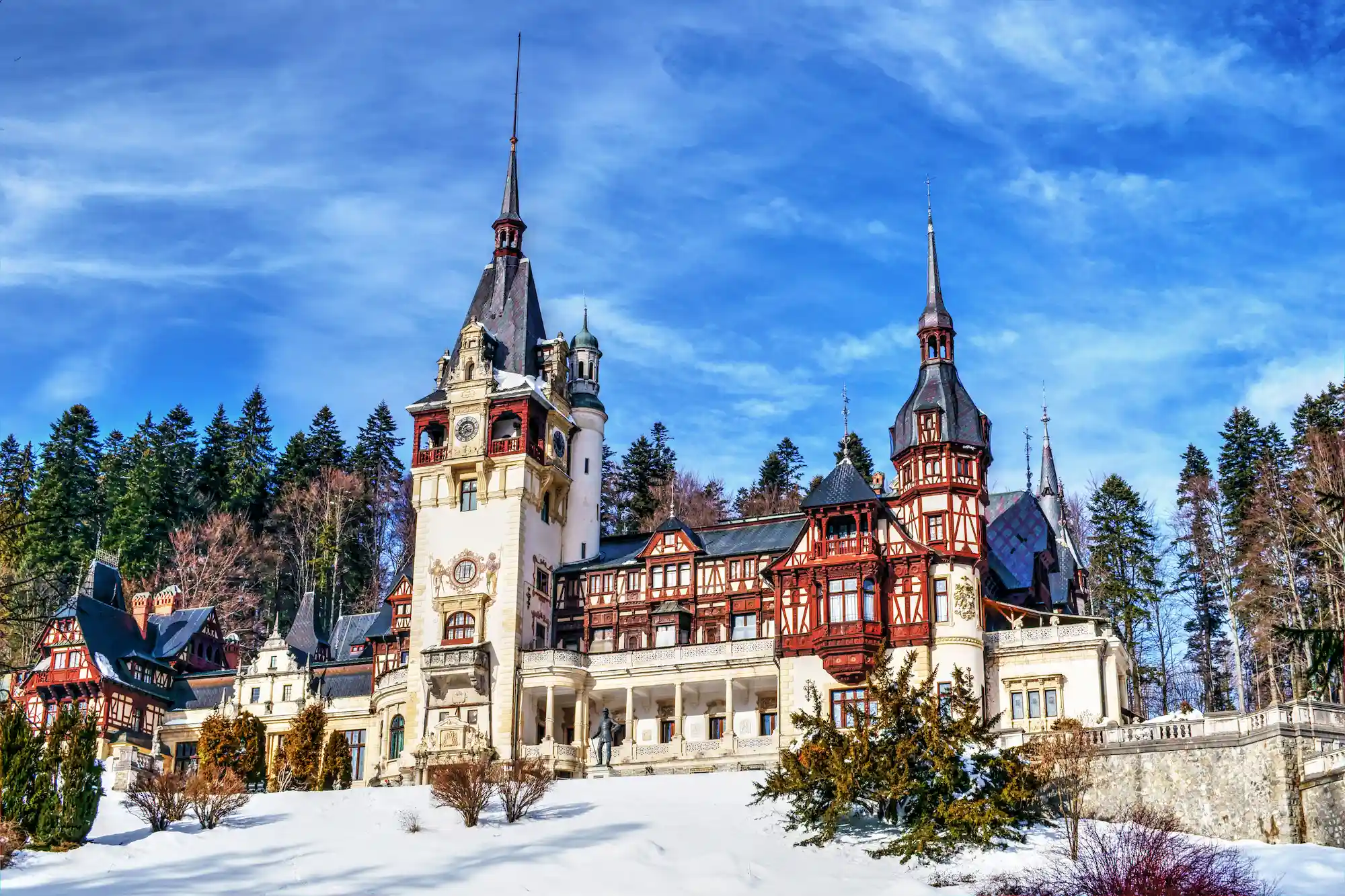
Discover the vision and history behind Romania’s royal masterpiece
Peleș Castle was not built by chance. It was the vision of King Carol I, who wanted to create a residence that would reflect both his origins and his ambitions for Romania. Located in the mountains of Sinaia, the castle became a symbol of a modern and independent nation.
Construction began in 1873 and lasted several years, bringing together architects, craftsmen and artists from across Europe. The result is a unique blend of styles, combining German Neo-Renaissance architecture with influences from Italian, Austrian and Ottoman design.
What makes Peleș truly special is not only its beauty, but its innovation. At a time when most castles still relied on traditional systems, Peleș was equipped with electricity, central heating and even a retractable glass roof. It was one of the most modern royal residences of its time.
Beyond its technical achievements, the castle was also a place of life. It hosted important political meetings, royal ceremonies and private moments of the Romanian royal family. Every room, every detail, was designed to reflect both power and refinement.
Today, Peleș Castle stands as a testament to a vision that went beyond architecture. It represents a turning point in Romania’s history, where tradition met innovation to create one of Europe’s most remarkable royal landmarks.